
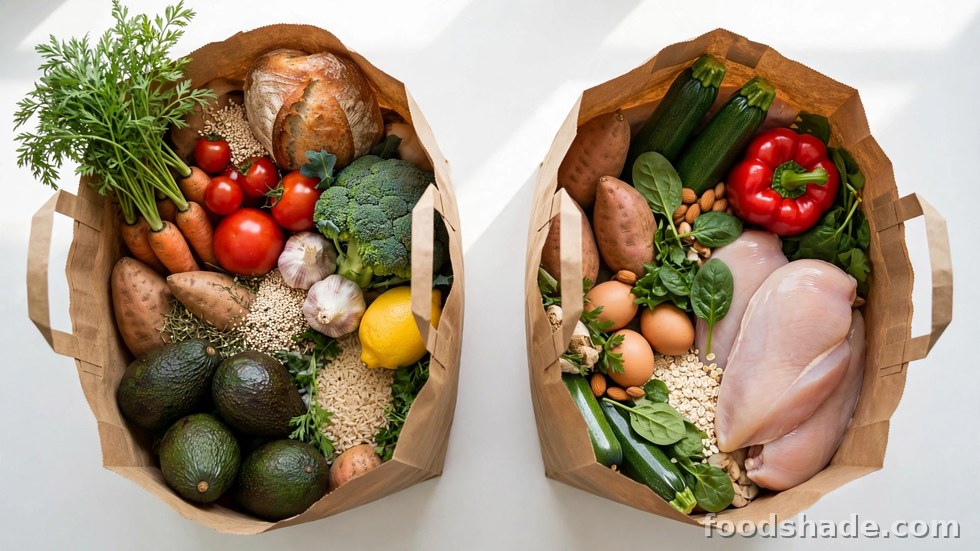
No Frills and Loblaws are owned by the same company, sell many of the same products, and can still charge wildly different prices for the same basket. Knowing which store wins on which staple is the simplest money skill a Canadian meal prepper can learn, and it takes one careful comparison shop to master.
In this guide, you will see exactly how No Frills versus Loblaws price comparison works in a real Canadian kitchen, what it costs, and where the savings actually come from. The whole system takes about 30 minutes of comparison a week, and the benefit is simple: this approach saves about $25 a week on the same basket. No coupons, no extreme budgeting, just a $25 plan that fits a normal life.
Table of Contents
Why No Frills versus Loblaws price comparison Matters for Your Grocery Budget
Groceries are one of the largest flexible costs in a Canadian household, and small changes on a $25 shop add up fast. This $25 system works because it targets the spending that is easiest to control: the unplanned trips, the duplicate purchases, and the food that goes off before you use it.
The numbers are encouraging. Used consistently, this approach saves about $25 a week on the same basket, and it does so without asking you to eat less well. The food stays the same, only the planning changes, and that is why the $25 habit actually sticks.
It helps to think of the $25 routine as a system rather than a single trick. The first week is about learning the steps, the second week is about smoothing them out, and by the third week you will notice the difference in your $25 spending without having to think about it. That is when the $25 habit starts paying for itself, week after week, all year long.
How It Works in Practice
The $25 system is simple, and it starts before you leave the house. Everything on the list below covers weekly shopping, and none of it takes more than a few minutes once you have done it twice.
- Chicken breast: often $3 to $4 per kg cheaper at No Frills
- No Name canned tomatoes and beans: the same product, lower price
- Produce: usually cheaper at No Frills but with less variety
- Bakery and deli: where Loblaws has the wider range
- PC brand pantry staples: priced the same at both stores
- Flyer specials: which rarely overlap in the same week
- Meat markdowns: more common at No Frills in the evening
- PC Optimum points: earned at both stores
The key is consistency, not perfection. If you follow the $25 routine most weeks, the savings show up within a month, and the habit becomes automatic faster than you might expect.
A Worked Example: The Numbers
Here is what a typical $25 week looks like. The full routine costs about $25 and covers weekly shopping, which works out to a few dollars per meal. The biggest single saving comes from store-brand staples and flyer specials, and the rest comes from the small decisions that add up across the week.
Where the Savings Come From
Most of the saving on a $25 shop comes from three places: buying the right things on special, wasting less of what you buy, and cooking in batches instead of ordering takeout. None of these is dramatic on its own, but together they saves about $25 a week on the same basket.
Common Mistakes to Avoid
A few mistakes undo most of the $25 benefit. Assuming the discount store always wins on everything. Ignoring quality differences on fresh meat and produce. And driving across town to save $2 and spending $5 on gas. Avoid those three and the $25 system mostly takes care of itself.
The One Habit That Matters Most
Compare per 100 gram prices, not package prices. Check the flyer first, a special can flip the winner. That single habit, repeated every week for 30 minutes of comparison, is worth more than any coupon or sale, because it works even in weeks when nothing is on special.
Putting It Into Your Weekly Routine
Start this week at No Frills, not next month. Pick one evening, spend 30 minutes of comparison on the planning, and shop with the list. If you want a companion guide, Pantry Staples Every Canadian Meal Prepper Should Stock pairs well with this one, because it covers the cooking side of the same weekly routine.
After two or three weeks, the routine will feel natural, and you can add Sheet Pan Chicken and Sweet Potato Meal Prep for the Week to stretch the savings further. The goal is not a perfect system, it is a $25 system you actually keep using.
Frequently Asked Questions
How much can I really save with No Frills versus Loblaws price comparison?
Once the routine settles in, this approach saves about $25 a week on the same basket for most households. The first week of the $25 routine is usually smaller as you learn the system, and the savings grow as you stop buying duplicates and wasting food. Over a full year, the $25 routine adds up to hundreds of dollars, which is a small holiday, a car repair, or simply less stress at the till.
Does this work at other Canadian stores?
Yes. The examples use No Frills, but the same approach works at any Canadian grocery store. If you have no No Frills nearby, FreshCo and Food Basics play the same role in Ontario, and Superstore fills it in the west.
How much time does No Frills versus Loblaws price comparison take each week?
About 30 minutes of comparison a week, plus the normal shopping and cooking time you would spend anyway. Most of that $25 routine is planning, and it drops quickly as the routine becomes familiar.
What is the best way to start with No Frills versus Loblaws price comparison?
Start small. No Frills produce is fine, just shop earlier in the day. Pick one week, follow the steps for weekly shopping exactly, and see how it feels before changing anything. A simple start beats an ambitious plan you abandon.
Final Verdict
No Frills versus Loblaws price comparison will not make you rich, but it will make your grocery money go further without making meals worse. It takes 30 minutes of comparison a week, it works at No Frills and beyond, and the payoff is steady: this approach saves about $25 a week on the same basket. Try it for one month, and check Slow Cooker Lentil and Sausage Soup for Frosty Days for the next step.